

What is Inflammatory Bowel Disease?
Inflammatory Bowel Disease (IBD) represents a group of idiopathic (of unknown cause) diseases of the gastrointestinal tract that are chronic (the patient will always suffer from it) and inflammatory. The two main categories of this disease are Chronic Idiopathic Ulcerative Colitis (CIUC) and Crohn's Disease (CD).
It is a little-known disease; however, every day more cases are being identified in our country.
Chronic Idiopathic Ulcerative Colitis (CIUC)
CIUC causes inflammation that can lead to the formation of ulcers in the colon and rectum. The main symptom is diarrhea accompanied by blood and mucus, often associated with abdominal pain, and sometimes accompanied by nausea, vomiting, and weight loss.
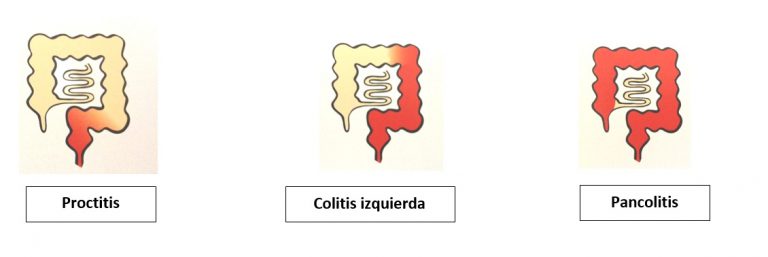
This disease is classified according to the extent of inflammation observed by colonoscopy into proctitis, proctosigmoiditis, left-sided colitis, or pancolitis. In other words, lesions in the colon begin in the most distal part and progress toward the proximal part, with rectal involvement (proctitis) being the most common.
Crohn's Disease (CD)
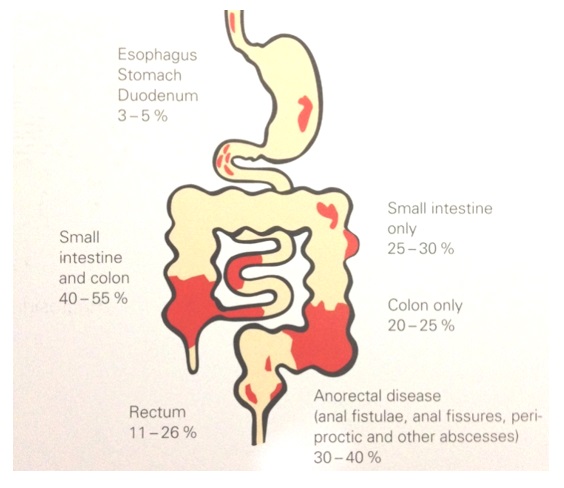
CD can affect any part of the digestive tract, from the mouth to the anus. It differs from CIUC in that it affects all four histological layers of the region of the digestive tract (transmural involvement).
The discomfort these patients experience is different; typical symptoms include chronic abdominal pain, diarrhea, and weight loss. However, CD can present as a case of intestinal obstruction, the formation of strictures (narrowing), fistulas (perianal), or abscesses. Nearly 50% of patients require surgical treatment in the first 10 years of the disease, depending on the affected site, with the ileocecal region (the last part of the small intestine and the first part of the colon) being the most frequent location of involvement.
How do I know if I have this disease?
We must mention that there is no single test that confirms the diagnosis of IBD. It is based on the clinical presentation, laboratory findings, imaging studies like tomography (CT scan), gastrointestinal endoscopy studies (upper endoscopy and colonoscopy), and the results of biopsies taken during these studies.
Can this disease be confused with "colitis"?
Unlike Irritable Bowel Syndrome (IBS), often referred to as "colitis," where blood and endoscopy tests are usually normal, in IBD there are indeed alterations that suggest the presence of this disease.
Is there a treatment for these diseases?
When a patient is diagnosed with IBD, the treatment lasts throughout their life. Today, there are various medications available (tablets, capsules, granules, suppositories, enemas, intravenous infusions), and some patients may even require surgical treatment depending on the behavior of the disease.
It is important to mention that in most cases, the diagnosis of these diseases is not easy, and today there is still a delay in diagnosis, sometimes for years. Therefore, it is crucial NOT to self-medicate and to consult a specialist physician in Gastroenterology if you experience any of the symptoms described.
Dra. Fabiola Maely González Ortiz
Specialist in Gastroenterology, Inflammatory Bowel Disease, and Diagnostic and Therapeutic Gastrointestinal Endoscopy
www.gastrohealthpn.com